To open a brewery in Georgia, you generally need federal TTB approval, the appropriate Georgia Department of Revenue alcohol license, a local alcohol license, local zoning approval, building and fire approvals, and any food-service, wastewater, business, and sales tax registrations required by your city or county. If you plan to operate as a brewpub, Georgia has specific requirements that differ from a production brewery, including the need to apply for a Consumption on Premises license before applying for a Brewpub License.
Georgia is a high-opportunity state for new brewery and restaurant-brewery concepts. Atlanta and its suburbs continue to expand, and markets such as Roswell, Alpharetta, Marietta, Savannah, Athens, Augusta, Columbus, Macon, and coastal Georgia all offer different hospitality opportunities. For EZBrew, Georgia is especially attractive because many operators are not trying to build a large regional brewery. They are trying to add local beer to an existing restaurant, franchise, winery, distillery, entertainment venue, hotel, or taproom concept.
The key to opening successfully is choosing the right license path and planning the location before equipment is ordered.
Why Georgia is attractive for brewery and brewpub growth
Georgia combines population growth, strong restaurant development, and a large metro hospitality market. It is also a state where regulatory details matter. The difference between a brewery, a brewpub, a restaurant, a manufacturer, a retailer, and a wholesaler can affect the permits, paperwork, ownership disclosures, sales privileges, and required sequencing.
For a traditional production brewery, Georgia can be a competitive market. For a restaurant or hospitality venue that wants to differentiate with house-brewed beer, however, the opportunity is still compelling. The right model is not necessarily the biggest brewery. It may be a smaller, automated brewing system that helps the venue sell higher-margin local beer without hiring a full brewery team or building a conventional brewhouse.
That is why Georgia is a strong state for a guide like this. Operators need practical guidance before they commit to a location, lease, construction budget, or equipment package.
Step 1: Choose the Georgia brewery model
The first decision is what kind of alcohol business you are opening. Common options include:
- A production brewery that manufactures malt beverages.
- A brewpub that manufactures beer in an eating establishment for retail consumption on the premises.
- A restaurant that wants to add brewing to improve margins and customer experience.
- A franchise hospitality location that wants local beer without the complexity of a traditional brewery.
- A winery, distillery, hotel, food hall, or entertainment venue that wants to add beer.
Georgia’s Department of Revenue separates brewery and brewpub licensing information. The Brewery License page describes a brewery as a business that makes, produces, and bottles alcoholic malt beverages. The Brewpub License page describes a brewpub as an eating establishment in which beer or malt beverages are manufactured or brewed, subject to statutory barrel limits, for retail consumption on the premises and solely in draft form.
That language matters. A brewpub is not simply a brewery with a kitchen. It is a different legal model with different requirements.
Step 2: Apply for federal TTB approval
Before brewing beer for commercial sale, you generally need to qualify with the TTB through a Brewer’s Notice. This federal process is separate from Georgia licensing and local approvals. TTB may require entity details, ownership information, signing authority, source-of-funds information, a brewery premises diagram, lease or ownership documents, and operational details.
The TTB states that if you have decided to brew beer for sale, you must first qualify with TTB by submitting a Brewer’s Notice. It also states that a brewer may not operate until the Brewer’s Notice is approved. That federal timing should be part of your Georgia opening timeline.
Do not assume you can start brewing while waiting on paperwork. Do not assume a local alcohol license is enough. Brewing beer for sale is a manufacturing activity, and the federal approval is a key part of the process.
Step 3: Understand Georgia Department of Revenue licensing
The Georgia Department of Revenue requires alcohol license applications to be filed online through the Georgia Tax Center. For alcohol licensing, applicants may need background investigation, tax clearance, fingerprinting, local licensing information, and uploaded documentation. Georgia’s rules also require state license applications to use the same name and address as the local license application, and a local license must remain valid where applicable.
For an in-state brewery, the Georgia DOR Brewery License page lists a $1,000 license fee and identifies required documents such as a Malt Beverage Bond Performance & Tax Liability Bond, Georgia Alcohol & Tobacco Personnel Statement, Citizenship Affidavit, annual registration from the Georgia Secretary of State, local license, lease or deed, federal Basic Permit or Brewer’s Notice, brand and label registration, designation of sales territory, power of attorney if applicable, and financial affidavit.
For a brewpub, the Georgia DOR Brewpub page also lists a $1,000 license fee and states that the applicant must apply for a Consumption on Premises license before applying for a Brewpub License. The page also references required documents such as citizenship verification, personnel statement, financial affidavit, power of attorney if applicable, Brewpub Performance & Tax Liability Bond, federal Basic Permit or Brewer’s Notice, local license, brand and label registration, and designation of sales territory.
In other words, Georgia is not a “fill out one simple form and start brewing” state. It is manageable, but it rewards preparation.
Step 4: Pay special attention to the Georgia brewpub food requirement
Georgia’s DOR brewpub guidance defines a brewpub as an eating establishment where beer or malt beverages are manufactured or brewed for retail consumption on the premises and solely in draft form. It also defines an eating establishment as an establishment licensed to sell distilled spirits, beer, malt beverages, or wines that derives at least 50 percent of total annual gross food and beverage sales from the sale of prepared meals or food, with certain barrel sales excluded from that calculation.
This can be very important for restaurant-based brewery concepts. If you are planning to open a brewpub, you must be prepared to operate like a qualifying eating establishment, not simply a bar with tanks. Your menu, operating plan, accounting, POS reporting, and alcohol license structure may all need to support that model.
For restaurant groups, this is manageable. For a taproom entrepreneur who wants limited food, it may not fit. That is why the brewery model must be selected before the lease and equipment plan are finalized.
Step 5: Confirm local alcohol licensing and zoning
Georgia is especially local in practice. The Georgia DOR tells applicants to contact the local licensing authority for additional requirements for obtaining a local alcohol retail license. Cities and counties can have their own zoning rules, alcohol distance rules, public hearing processes, background checks, police approvals, fire approvals, certificate-of-occupancy requirements, health inspections, and business-license steps.
Before signing a lease in Atlanta, Roswell, Savannah, Athens, Augusta, Alpharetta, Marietta, Macon, or any Georgia municipality, confirm:
- Whether brewery, brewpub, restaurant, manufacturing, and alcohol sales are allowed at the specific address.
- Whether the local license category matches the state license category.
- Whether the business name and address will be identical on state and local applications.
- Whether food service is required or expected.
- Whether a public hearing, distance waiver, neighborhood notice, or police review is required.
- Whether the premises diagram will match the final construction layout.
- Whether the landlord consents to alcohol manufacturing, tanks, drains, and utility changes.
These issues can delay opening even when the state license paperwork is strong.
Step 6: Plan equipment around the approved premises
A Georgia brewery application often requires a lease or deed, local license, federal permit, brand and label documentation, and a premises plan. If equipment is installed in an area that does not match the licensed premises, or if service areas change after approval, additional licensing questions can arise.
For a traditional brewery, the equipment plan may include a brewhouse, fermentation tanks, bright tanks, grain storage, milling, hot water, steam or electric service, floor drains, glycol, packaging, and a brewer. For a restaurant or hospitality model, that may be more than the business needs.
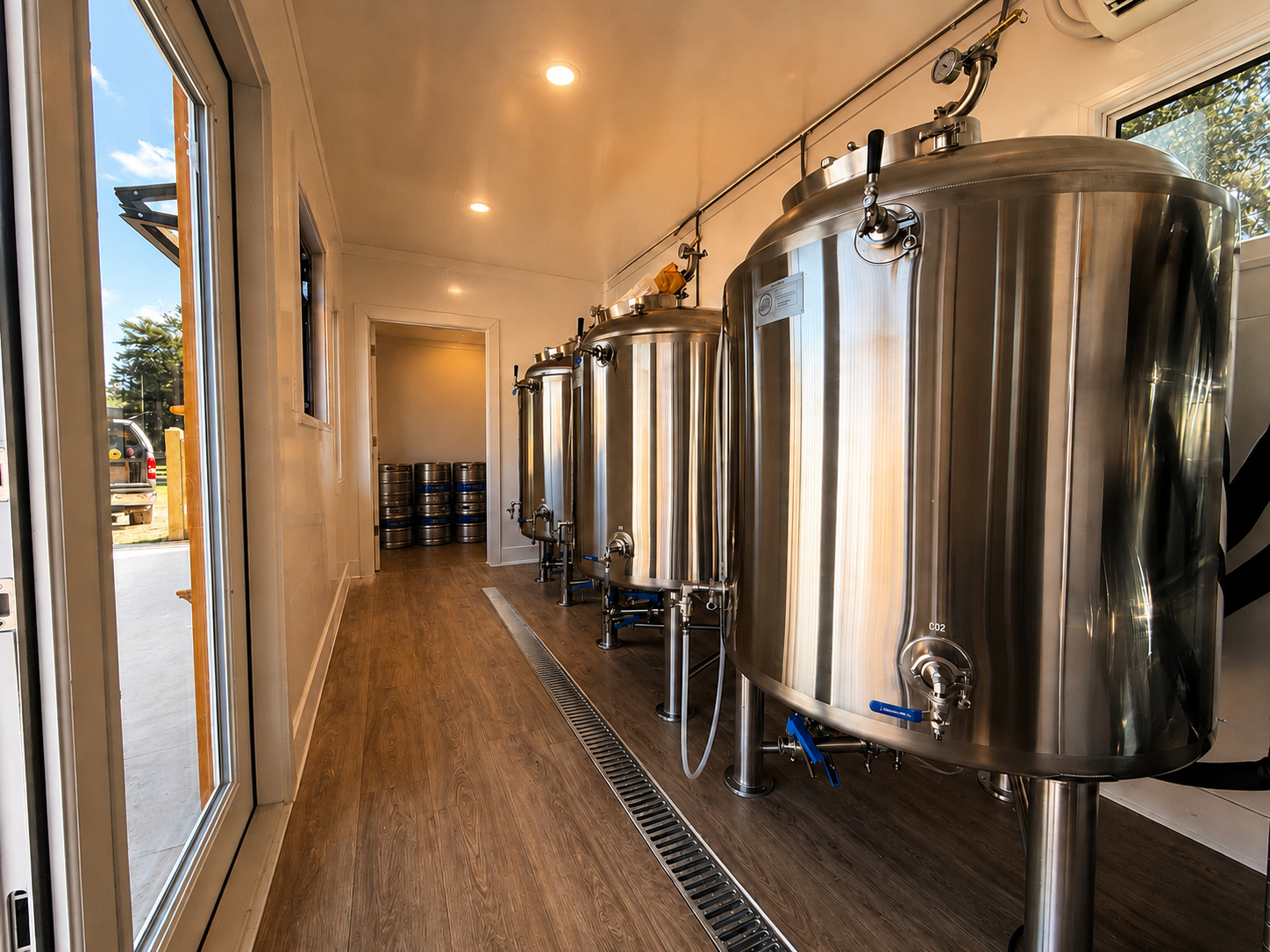
EZBrew’s automated system is designed to simplify that equation. EZBrew uses Brew-Ready Beer Kits, automation, training, remote monitoring, and a smaller operational footprint to help operators produce house beer without building a conventional brewery. For Georgia restaurant groups, franchise operators, and hospitality venues, the value is not just equipment. It is reducing the number of variables that can complicate licensing, installation, staffing, and production.
The danger of going alone on Georgia regulatory
Georgia’s alcohol licensing process involves federal, state, and local layers. A mistake in one layer can create problems in another. For example, if the local license uses a slightly different address than the state application, or the premises diagram changes after a buildout, the state process can become more complicated. If a brewpub applicant forgets the Consumption on Premises step, the application sequence can be delayed. If a restaurant concept cannot meet the food-sales requirement, the brewpub model may not work.
Common Georgia mistakes include:
- Confusing a brewery license and brewpub license.
- Assuming a restaurant alcohol license allows beer manufacturing.
- Missing the Consumption on Premises requirement before the Brewpub License.
- Failing to match state and local application information.
- Signing a lease before local zoning is confirmed.
- Underestimating bonds, background checks, fingerprints, and ownership disclosures.
- Treating brand registration and sales territory designation as afterthoughts.
- Buying traditional brewery equipment before confirming the premises can support it.
EZBrew is not a law firm, but it can help operators organize the process and avoid common planning mistakes. The goal is to help customers understand the path before they spend unnecessary money or lose months in regulatory back-and-forth.
Georgia brewery startup checklist
- Define your model: brewery, brewpub, restaurant brewery, or hospitality add-on.
- Confirm whether the brewpub food-sales requirement fits your concept.
- Verify local zoning and alcohol eligibility before signing the lease.
- Apply for or plan the federal TTB Brewer’s Notice.
- Confirm the correct Georgia DOR license category.
- Coordinate local alcohol licensing and state application information.
- Gather ownership, bond, Secretary of State, lease/deed, and premises documents.
- Prepare brand, label, and sales territory information as required.
- Coordinate building, fire, health, and utility approvals.
- Choose equipment that matches your approved premises and revenue model.
FAQ: Opening a brewery in Georgia
Do I need a TTB Brewer’s Notice in Georgia?
Yes. A business producing beer for sale generally needs federal TTB approval through a Brewer’s Notice before commercial operations.
What is the Georgia brewery license fee?
Georgia DOR’s in-state brewery and brewpub pages list a $1,000 license fee for brewery and brewpub licenses, but applicants should confirm current fees with the state before filing.
What is a brewpub in Georgia?
Georgia DOR describes a brewpub as an eating establishment where beer or malt beverages are manufactured or brewed for retail consumption on the premises and solely in draft form, subject to statutory production limitations.
Does a Georgia brewpub need to sell food?
Georgia’s brewpub guidance defines the relevant eating establishment as one that derives at least 50 percent of total annual gross food and beverage sales from prepared meals or food, with certain barrel sales excluded. Operators should review this requirement closely.
Can EZBrew help open a brewery in Georgia?
Yes. EZBrew can help with equipment planning, brewing workflow, startup timelines, regulatory assistance, training, and support for restaurant and hospitality-based brewing models.
Call to action
Interested in opening a brewery in Georgia? Click here to schedule time to speak with one of our specialists. EZBrew can help you understand the Georgia brewery and brewpub paths and decide whether an automated brewing model is right for your business.