To open a brewery in North Carolina, you generally need federal approval from the Alcohol and Tobacco Tax and Trade Bureau, commonly called the TTB, plus the appropriate North Carolina Alcoholic Beverage Control Commission permits, local zoning approval, building and fire approvals, and any food-service, wastewater, utility, and local beer or wine licenses required by your city or county. If you plan to operate as a restaurant, brewpub, taproom, winery, distillery, golf club, or entertainment venue that also wants to brew beer on-site, you should map the regulatory path before you sign a lease or purchase equipment.
North Carolina is one of the best states in the country for a brewery, brewpub, or restaurant-based brewing model. The state has a deep craft beer culture, high-growth metro areas, and a strong hospitality economy. Raleigh, Cary, Durham, Charlotte, Asheville, Wilmington, Greensboro, Winston-Salem, and the coastal markets all have very different zoning, utility, and customer-demand profiles. That is why a North Carolina brewery plan should not be treated as a generic checklist. The most successful projects start by aligning the business model, location, equipment, permits, wastewater expectations, and production volume before money is spent on construction.
This guide explains the major steps to open a brewery in North Carolina and how an automated brewing partner like EZBrew can help simplify the path.
Why North Carolina is a strong brewery expansion state
North Carolina is not just a legacy craft beer state; it is still a growth state. The North Carolina Office of State Budget and Management projects the state will add roughly 534,000 residents between 2025 and 2030, with most growth concentrated in urban, suburban, and regional center counties. That matters for brewery operators because new residents drive new restaurants, new mixed-use developments, new entertainment districts, and new demand for local experiences.
For EZBrew customers, North Carolina is especially attractive because the opportunity is not limited to traditional breweries. Many of the strongest future candidates are restaurants, franchise hospitality groups, wineries, distilleries, hotels, resorts, country clubs, food halls, and entertainment venues that want the marketing, margin, and customer-experience benefits of house-brewed beer without taking on the cost and complexity of a large conventional brewhouse.
A North Carolina restaurant does not necessarily need to become a full-scale production brewery to benefit from brewing. The more practical question is: can the location legally, physically, and operationally support brewing at the scale required for the business model? That is where early regulatory planning matters.
Step 1: Decide what kind of brewery business you are opening
Before applying for permits, define your model clearly. Common brewery models in North Carolina include:
- A production brewery that manufactures beer and distributes through wholesalers.
- A taproom brewery that makes beer primarily for on-site consumption.
- A restaurant brewery or brewpub-style concept that uses beer as part of a larger food-and-beverage business.
- A winery, distillery, golf club, or entertainment venue adding beer to improve guest experience and margins.
- A small-footprint automated brewery that produces house beer without requiring a traditional brewing staff.
This decision affects your licensing path, your floor plan, your local zoning review, your wastewater plan, your equipment needs, and your staffing model. The mistake many operators make is starting with equipment first. The smarter approach is to start with the legal use of the premises and the revenue model, then select the brewing system that fits.
For example, a restaurant in Cary or Raleigh may care most about on-premise pint sales, customer experience, and branded house beer. A production brewery outside Charlotte may care more about packaging, distribution, cold storage, and wholesaler relationships. Those are very different businesses, even though both involve making beer.
Step 2: Obtain federal approval through the TTB
Any business brewing beer for sale must qualify with the TTB by submitting a Brewer’s Notice. This is the federal approval that allows the business to produce beer commercially. TTB approval is separate from North Carolina ABC permits and local approvals.
The federal process generally requires business entity information, ownership disclosures, signing authority, source-of-funds information, a brewery premises diagram, a lease or proof of ownership, equipment information, and operational details. The TTB states that a brewer may not begin operating until the Brewer’s Notice is approved. Even if there is no federal application fee, the process still requires accuracy and planning.
This is one of the first places where going alone can create expensive delays. A lease may describe the premises one way, the floor plan may describe it another way, and the local building department may require changes that affect the brewery diagram. If these documents do not align, the application can stall. A seemingly small layout change, like moving tanks, changing storage areas, or adding a patio service area, can create additional questions.
A good project plan should treat TTB approval as part of the construction and licensing timeline, not as something to figure out after the equipment arrives.
Step 3: Apply for North Carolina ABC permits
North Carolina’s ABC Commission issues both retail and commercial permits. For brewery projects, the most important state-level permit is usually the Brewery Permit. The NC ABC permit type list identifies the Brewery permit as authorizing the manufacture of malt beverages, with a listed application fee of $300. Depending on your operating model, you may also need retail malt beverage permits, such as on-premise or off-premise malt beverage permits, which the NC ABC permit list shows at $400 each.
The NC ABC commercial permit guidance states that commercial permits apply to qualified breweries and similar businesses engaged in manufacturing, producing, and packaging malt beverage and wine products. Retail permits are issued for restaurants, hotels, private clubs, grocery stores, convenience stores, and similar retail establishments. This distinction matters because a restaurant that sells alcohol and a brewery that manufactures beer are not the same regulatory activity.
North Carolina’s brewery authorization includes the ability to manufacture malt beverages, purchase ingredients, sell and ship malt beverages in closed containers to licensed wholesalers, and, with the appropriate permit, sell the brewery’s malt beverages at the brewery. If you expect to operate both as a manufacturer and as a retail hospitality business, you need to make sure your permit stack matches the actual business.
Step 4: Confirm local zoning before signing a lease
North Carolina cities and counties can be highly specific about where brewing is allowed. Zoning can turn into the real gating item. A site may be perfect from a customer standpoint and still fail because the local code treats brewing, production, alcohol sales, outdoor seating, food service, or wastewater differently than expected.
In Raleigh, for example, businesses selling beer or wine must obtain a Beer/Wine License and are instructed to first obtain temporary ABC permits from the North Carolina ABC Commission. Raleigh also advises applicants to contact Planning and Development to confirm that alcohol sales are allowed at the location. This is a useful example of the broader point: state approval does not automatically mean local approval.
Before signing a lease, confirm:
- Whether brewery, brewpub, restaurant, taproom, or manufacturing use is allowed.
- Whether alcohol sales are allowed at the exact parcel.
- Whether a special use permit, conditional use approval, or zoning interpretation is needed.
- Whether outdoor consumption areas, patios, events, or live music are allowed.
- Whether the landlord permits alcohol manufacturing and tank installation.
- Whether floor drains, plumbing, electrical, glycol, ventilation, and water supply are feasible.
A strong lease should include a licensing contingency whenever possible. A business should avoid being locked into a long lease for a space that cannot legally or economically support the brewing model.
Step 5: Plan for wastewater, plumbing, and utilities
Traditional breweries can create real concerns for local utilities, especially around wastewater, solids, pH, floor drains, cleaning chemicals, and discharge volume. Municipalities may ask about pretreatment, pH control, solids separation, grease traps, floor drains, mop sinks, backflow prevention, and discharge points.
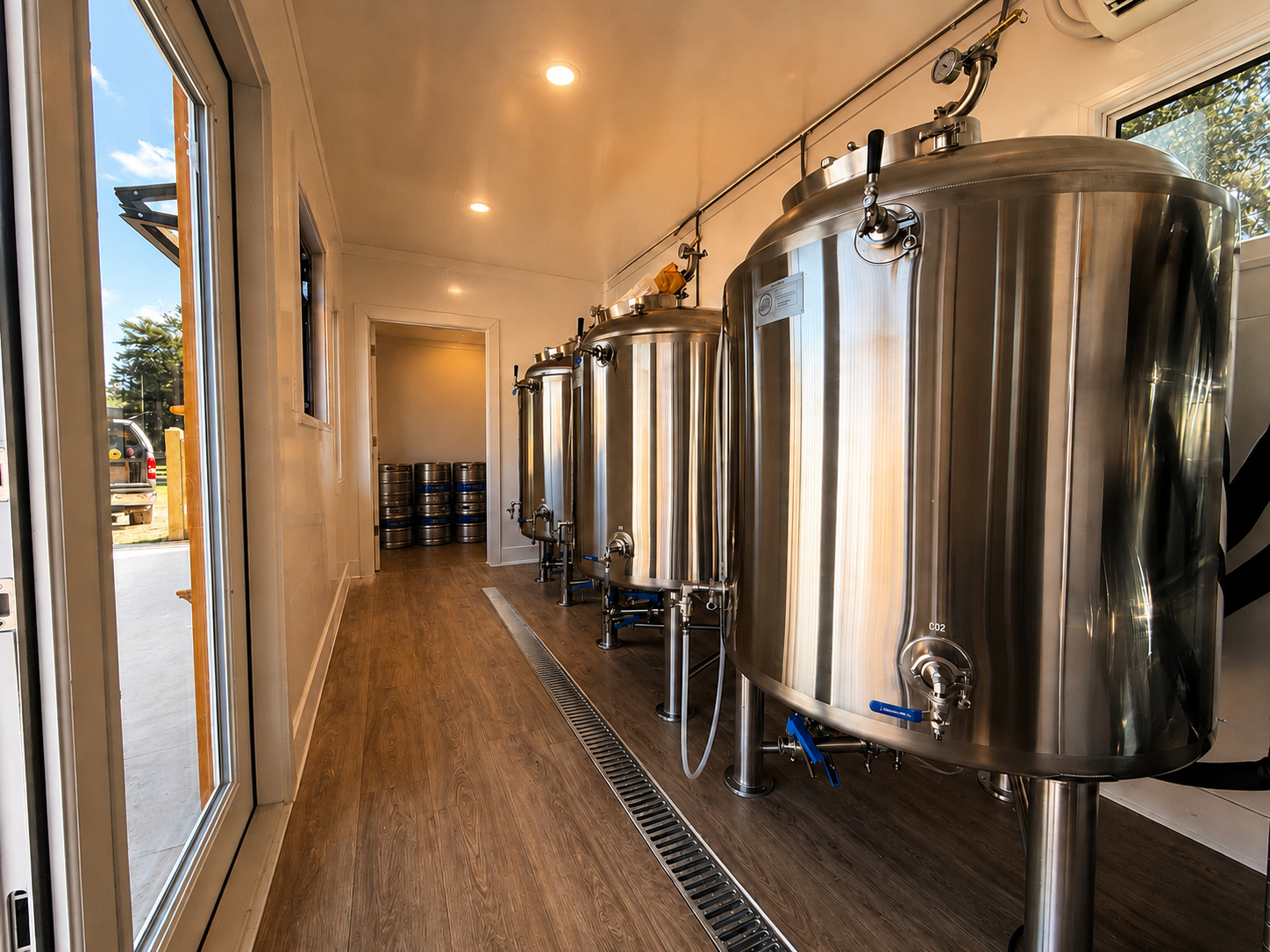
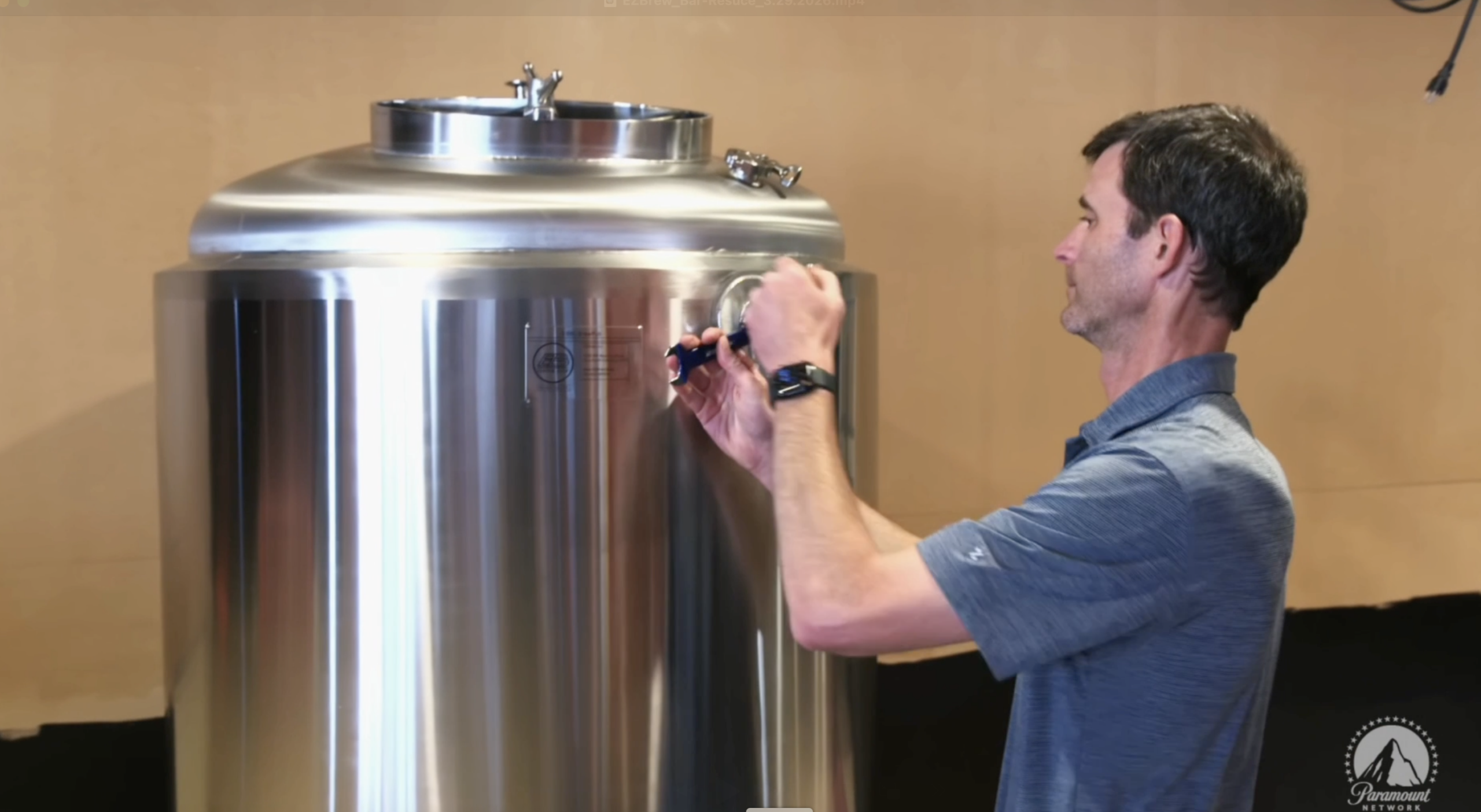
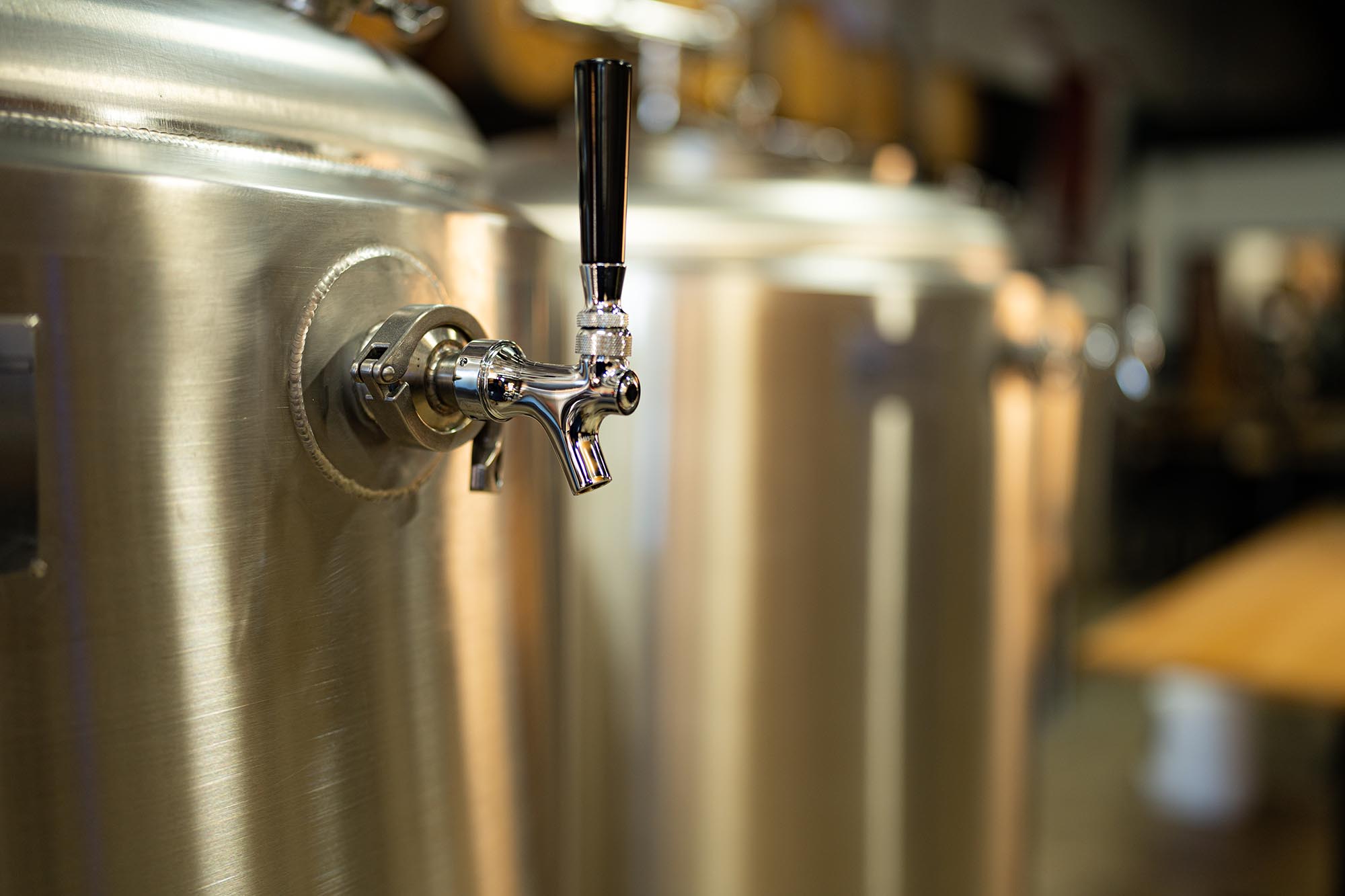
This is where the EZBrew model can be useful. EZBrew is not a traditional grain-based brewhouse. It uses Brew-Ready Beer Kits, high-gravity wort, automated processes, and a smaller operational footprint. That can help reduce some of the issues associated with grain handling, spent grain, large boil kettles, and extensive hot-side brewing. Local authorities may still have questions, but the conversation is often different from a conventional brewery buildout.
For North Carolina operators, especially restaurants or hospitality venues, the key is to present the brewing process clearly. Do not assume a local inspector will understand the difference between a traditional brewery and an automated small-footprint fermentation system. Provide a clear equipment description, water-use assumptions, cleaning process, chemical safety information, glycol containment details, and expected discharge profile.
Step 6: Match the equipment to the business model
A common mistake is overbuilding. Many first-time brewery owners spend too much on equipment, construction, trench drains, glycol infrastructure, grain handling, and brewer labor before they have proven customer demand. In a maturing beer market, the goal should be profitable local beer, not just more barrels.
For many North Carolina restaurants and hospitality operators, the question is not, “How do we build a massive brewery?” The better question is, “How do we add fresh, branded, high-margin beer with the least disruption to our existing business?”
EZBrew is designed around that idea. Instead of requiring a full brewhouse, experienced brewer, grain storage, and complex production schedule, EZBrew helps operators produce beer with automation, Brew-Ready Beer Kits, training, remote support, and regulatory guidance. This can be especially helpful for venues that want the profit and marketing benefit of house beer but do not want to become a traditional production brewery.
The danger of going alone on regulatory
Opening a brewery is not just buying tanks. It is coordinating federal, state, and local approvals. The risk is not only denial; the bigger risk is delay. Delays can push back opening dates, create rent burn, postpone revenue, and force expensive redesigns.
Common North Carolina mistakes include:
- Signing a lease before confirming zoning and alcohol eligibility.
- Assuming a restaurant alcohol permit allows beer manufacturing.
- Submitting a TTB diagram that does not match the final buildout.
- Forgetting local beer or wine licenses.
- Underestimating wastewater questions.
- Buying equipment that does not fit the approved premises.
- Failing to coordinate ABC timing with construction and inspections.
EZBrew is not a law firm, and operators should use qualified counsel when legal advice is needed. But partnering with an industry leader that understands brewery startup steps can make the process more organized. EZBrew helps customers think through the regulatory path, equipment layout, brewing workflow, and practical questions before they become expensive problems.
North Carolina brewery startup checklist
Use this checklist as a starting point:
- Define the business model: production brewery, brewpub, restaurant brewery, taproom, or hospitality add-on.
- Confirm that the proposed location allows brewing and alcohol sales.
- Review lease language for alcohol manufacturing, utilities, drains, and licensing contingencies.
- Prepare the TTB Brewer’s Notice and premises diagram.
- Identify the correct NC ABC commercial and retail permits.
- Confirm local beer/wine licenses and city or county requirements.
- Coordinate building, fire, health, and utility reviews.
- Prepare wastewater and cleaning-process information.
- Select equipment that fits your volume, labor, space, and margin goals.
- Build a timeline that connects licensing, installation, training, and first beer served.
FAQ: Opening a brewery in North Carolina
Do I need a TTB Brewer’s Notice to open a brewery in North Carolina?
Yes. If you are brewing beer for sale, you generally need federal TTB approval through a Brewer’s Notice before operating commercially.
What North Carolina ABC permit do I need to manufacture beer?
The primary state permit is typically the NC ABC Brewery Permit. Depending on your business model, you may also need retail malt beverage permits for on-premise or off-premise sales.
Can a restaurant open a brewery in North Carolina?
Yes, but the restaurant must plan correctly. Selling beer at retail and manufacturing beer are different activities. A restaurant-based brewery should review federal, state, local, zoning, health, and utility requirements before moving forward.
Is North Carolina a good state for a brewpub?
Yes. North Carolina has strong population growth, a mature beer culture, and many growing hospitality markets. The opportunity is strongest when the brewing model is matched to the location, customer base, and operating team.
Can EZBrew help with the brewery opening process?
Yes. EZBrew helps customers simplify the path with automated brewing equipment, Brew-Ready Beer Kits, training, remote support, and regulatory assistance. EZBrew is not a law firm, but it helps operators avoid common planning and process mistakes.